
Losing a tooth isn’t just a cosmetic issue—it affects your chewing, speech, and the health of adjacent teeth. Two main solutions are available: the dental bridge and the implant. Each has its advantages, limitations, and an ideal patient profile. Let’s break it down.
Essential Summary
| Criterion | Dental Bridge | Dental Implant |
|---|---|---|
| Average lifespan | 7 to 15 years | 20 years and more |
| Surgery required | No | Yes (titanium screw placement) |
| Impact on adjacent teeth | Abutment teeth must be trimmed | No impact |
| Bone preservation | No (possible resorption) | Yes (bone stimulation) |
| Treatment timeline | 2 to 3 weeks | 3 to 6 months (bone healing) |
| Approximate cost | $2,000 to $4,000 | $3,500 to $6,000 |
How Do Bridges and Dental Implants Work?
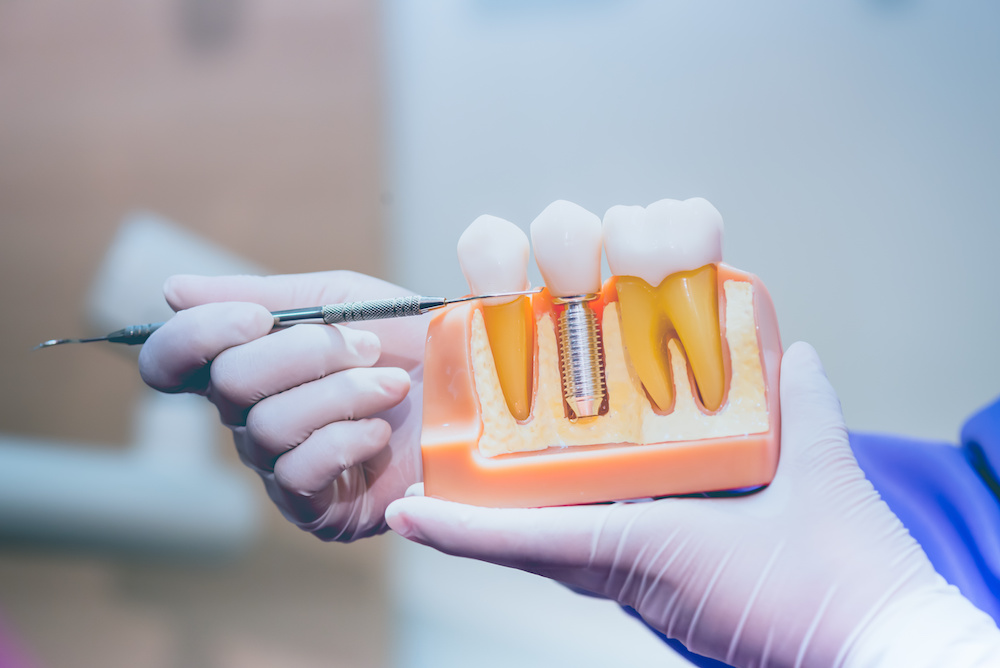
A dental bridge is a fixed prosthesis made up of three or more elements: two crowns placed on the adjacent teeth (called abutment teeth) and one or more artificial teeth suspended between them (pontics). The abutment teeth must be trimmed to receive the crowns, which means removing part of their healthy enamel.
A dental implant, on the other hand, is a biocompatible titanium screw surgically inserted into the jawbone. After a healing period of three to six months, during which the bone fuses with the implant (osseointegration), an abutment and crown are attached to the screw. The implant functions as an artificial root, independent of neighboring teeth.
What Criteria Should You Consider?
Several factors influence the decision between a bridge and an implant. The condition of adjacent teeth is key: if they are already crowned or heavily restored, a bridge may be a logical option since they need protection anyway. Conversely, if the neighboring teeth are healthy, trimming them for a bridge represents an unnecessary sacrifice.
Bone density also plays a crucial role. An implant requires sufficient bone volume. If significant bone resorption has occurred since the tooth was lost, a bone graft may be needed beforehand, extending treatment time and increasing costs. Your overall health matters too: uncontrolled diabetes, active smoking, and certain medical conditions can compromise healing after implant placement.
Bridge or Implant in Montreal: Local Factors to Consider
Cost remains a major factor for many Montrealers. Dental implants are generally not covered by RAMQ, and private insurance coverage varies significantly from one plan to another. Bridges, often classified as fixed prostheses, sometimes receive better coverage.
At Clinique Dentaire Metro Papineau, the team performs a thorough examination including a panoramic X-ray to assess your bone density and present a detailed treatment plan with associated costs. Payment plans are available to make both options accessible.
Book Your Appointment
Lost a tooth and deciding between a bridge and an implant? Book an appointment at Clinique Dentaire Metro Papineau for a personalized assessment and a treatment plan tailored to your situation
FAQ: Frequently Asked Questions
Is getting a dental implant painful?
Implant placement is done under local anesthesia and the procedure itself is painless. After the intervention, mild pain and swelling are normal for a few days and are easily managed with anti-inflammatory medication prescribed by your dentist.
Can multiple missing teeth be replaced with implants?
Yes. Multiple implants can support an implant-supported bridge or a complete fixed prosthesis. This solution avoids wearing a removable denture and offers comfort comparable to natural teeth.