
Losing a tooth is not trivial. Beyond aesthetics, tooth loss leads to bone resorption, bite problems, and a loss of self-confidence. Dental implants are today the solution closest to a natural tooth. Here’s what you really need to know before making a decision.
Essential Summary
| Replacement Option | Average Lifespan | Bone Preservation | Approximate Cost (CAD) |
|---|---|---|---|
| Dental implant | 15–25 years | Yes | $3,000 – $5,000 |
| Dental bridge | 10–15 years | No | $2,000 – $4,000 |
| Removable partial denture | 5–10 years | No | $1,000 – $2,500 |
| Do nothing | Indefinite | No (resorption) | $0 (high future costs) |
How a Dental Implant Works: From Placement to Crown
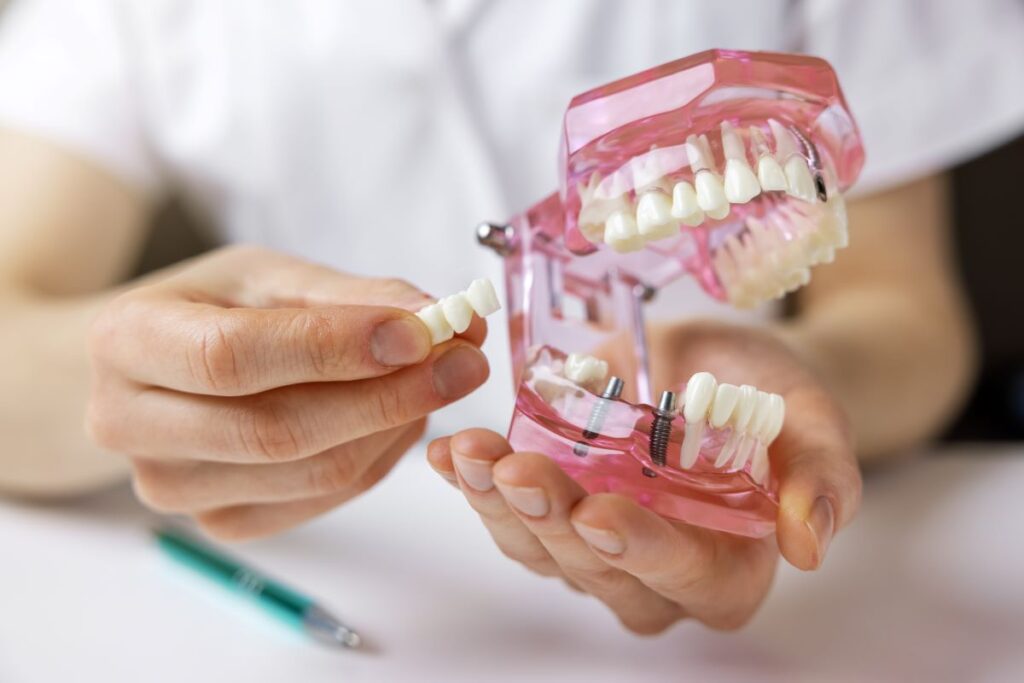
A dental implant is a titanium screw surgically inserted into the jawbone. It replaces the root of the missing tooth. A ceramic crown that visually and functionally mimics a real tooth is then attached to this implant.
The process takes place in several stages:
- Consultation and radiological assessment: 3D scan or panoramic X-ray to evaluate available bone volume.
- Implant placement: Surgical procedure under local anesthesia. The implant is screwed into the bone.
- Osseointegration: A 3 to 6-month period during which the bone fuses with the titanium.
- Crown placement: Once integration is confirmed, the definitive crown is attached.
According to Clinique Métro Papineau, a Montreal dental clinic, the success rate of implants after 10 years exceeds 95% in non-smoking patients without bone disease history — a result far superior to prosthetic alternatives.
Am I a Good Candidate? The Essential Criteria
Dental implants are not suitable for everyone. Key criteria assessed by your dentist:
Favorable criteria:
- Sufficient bone volume in the jaw
- Healthy gums (no active periodontitis)
- Non-smoker or limited smoking
- Good general health (controlled diabetes is acceptable)
- Rigorous oral hygiene
Factors to evaluate carefully:
- Heavy smokers (increased failure risk)
- Patients on bisphosphonates (osteoporosis treatment)
- Adolescents (bone growth not yet complete)
- Insufficient bone volume (may require prior grafting)
If bone volume is insufficient, a bone graft can be performed before implant placement. This step adds 4 to 6 months to treatment but makes implants possible in most cases.
Dental Implants in Montreal: Real Costs, Insurance and Timelines
The cost of a dental implant in Montreal generally ranges from $3,000 to $5,000 per tooth, including the implant, abutment, and crown. This amount may be higher if a bone graft is needed.
Most dental insurance plans in Quebec partially cover implants — often 50% to 80% of fees, depending on the contract. Some public plans (RAMQ) do not cover implants, but financing plans are available at the clinic.
In terms of timelines, expect 4 to 12 months from start to final crown, depending on whether grafting is needed. Clinique Métro Papineau guides each patient through the planning and coordination of steps for a smooth, no-surprise treatment.
FAQ: Frequently Asked Questions
Is dental implant placement painful?
The procedure is performed under local anesthesia and is generally not very painful. Post-operative discomfort (swelling, mild pain) lasts 2 to 5 days and is well controlled by standard painkillers.
How long does a dental implant last?
With proper maintenance (brushing, flossing, regular scaling), an implant can last 20 to 25 years or even a lifetime. The crown may need replacement after 10 to 15 years.
Can I get a same-day implant in Montreal?
Immediate implants are possible in certain cases (simultaneous extraction-implantation), but they require very specific conditions. Clinique Métro Papineau evaluates this possibility during the initial consultation.